


Heading 6
May 27, 2026
By:
Britain Powers
Q&A with Becky Cerling Powers, Author of Forbidden Orphanage
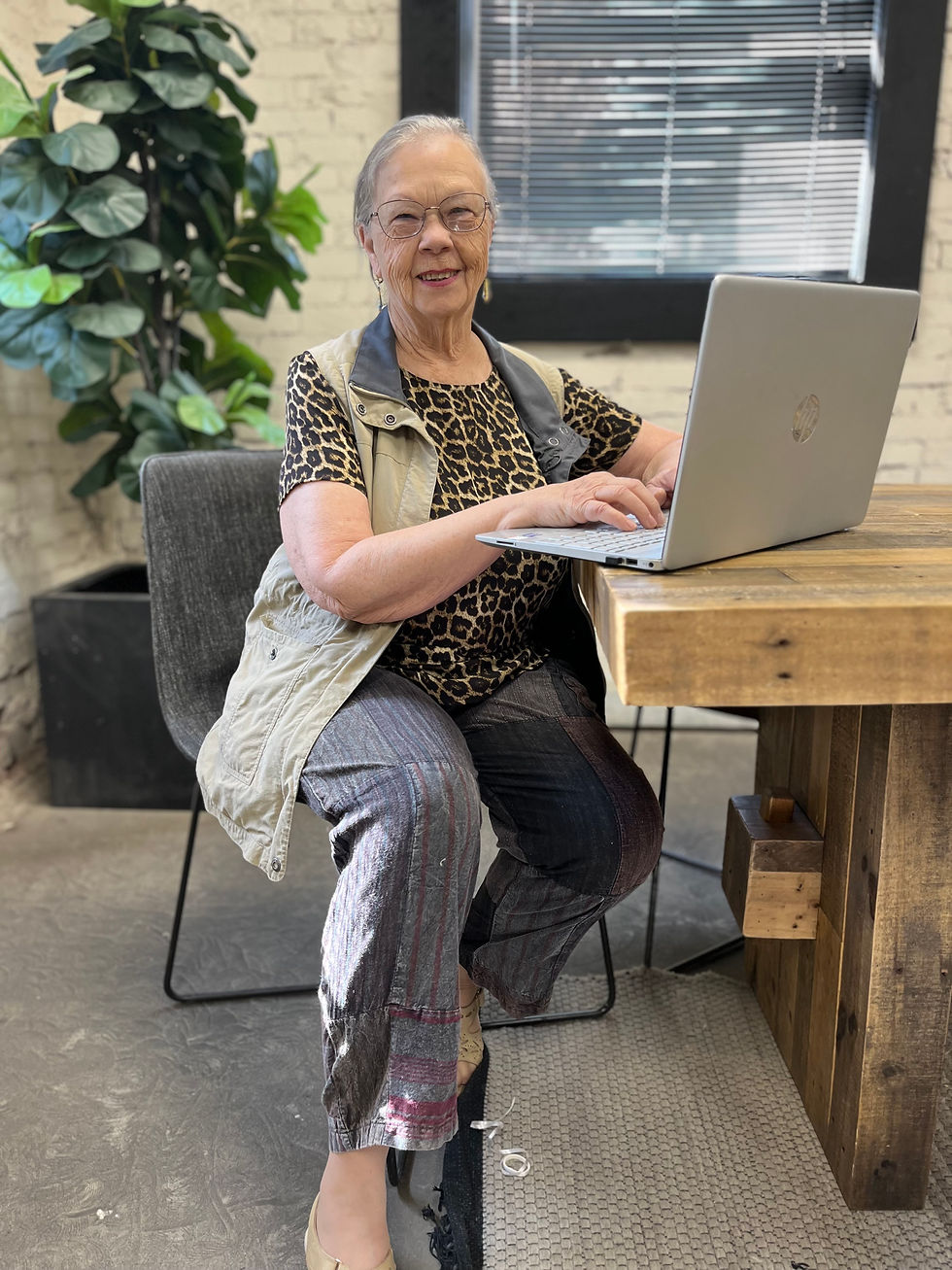
Q&A with Becky Cerling Powers, Author of Forbidden Orphanage Outside the Forbidden City
________
Forbidden Orphanage Outside the Forbidden City brings to light the remarkable yet somewhat unknown story of Laura Richards, an American nurse whose faith and compassion transformed the lives of hundreds of orphaned children in early 20th-century China. Through decades of meticulous research, letters, and firsthand accounts, Becky Cerling Powers reconstructs a life shaped by sacrifice, resilience, and unwavering faith.
Buy the book here. Book Description:

Laura Richards was a shy American nurse who moved to a remote North China village in 1929 to take in castaway babies. Through 22 years of famines, bandit invasions, and wars, she lived in the same poor conditions as the Chinese peasants, while managing to save the lives of nearly 200 destitute children. So
why did she refuse the Chinese Communist Party’s offer to make her a national heroine? Laura Richards’ story was too dangerous to tell when she returned to the U.S. in 1951. But when she died thirty years later, the old letters, photographs, and scattered bits of memoir that she left behind were so intriguing to her second cousin Becky Cerling Powers, that Becky began a 25-year quest to discover her quiet relative’s amazing story. Eventually, that quest led Becky to China and the orphans themselves. Today, over half a century after Laura left China, her story and her children’s story can finally be told. Author Bio: Becky Cerling Powers is a retired journalist and author or compiler of several books, including Forbidden Orphanage Outside the Forbidden City; Sticky Fingers, Sticky Minds (parenting); and My Roots Go Back to Loving (El Paso family stories). She loves to listen to people’s stories and teach kids to write. You can find more about Becky at www.beckypowers.com.
Writing this book was a long-term research project spanning many years, even decades. You’ve said that your mother’s stories about Laura inspired you when you were young. Beyond those childhood memories, was there anything else that moved you to tell Laura’s story? What motivated you to dedicate so much time and effort to bringing it to life?
The simple answer is that I felt Jesus called me to do it and then gave me practical help as I moved forward. One important push forward for me came from a teaching I attended on praying for a faith vision.
When the disciples of Jesus came to him and asked, “Teach us to pray,” Jesus gave them a simple prayer for all times and places. There are other times, though, when – keeping in mind the profound basics of the Lord’s Prayer – believers need to come to Jesus and ask for insight on how to pray very specifically for someone they love or for a life situation. That’s what Laura did when she fasted and prayed to figure out what exactly God wanted her to do in China. He gave her a faith vision – to save the lives of orphaned and abandoned Chinese children while trusting Jesus to provide for them and herself. When she asked, “How?” and waited, more insight came: by following the faith principles explained and demonstrated by George Mueller. And then she began the long, long journey of responding to the faith vision.
A faith vision means seeing people and situations from God’s perspective while believing in his power and loving supply to do whatever needs to be done. In my case, I took time to ask God a specific question: “What do you want me to do with my writing?” Then I just waited in silence and tried to discern the Holy Spirit’s prompting. A faith vision then came to me through reading and meditating on Psalm 90. Maybe that sounds mysterious, but it becomes a very practical way of life, sort of like a baby crawling around and then realizing they can try walking. You stumble, you fall, you make mistakes, but it’s better than crawling.
That was really Laura’s great gift to me: poking me into exploring the spiritual heritage I already had until I saw that there was so much, much more than I’d understood, and always more to explore.
In the prologue, you mention that the story was heavily detailed except for the beginning. How did the research process differ between the opening of the story and the more heavily documented sections? Did you have any concerns about accurately representing what transpired?
The first chapter is as soaked in research as the rest of the book, even though the scenes and sequels are mostly fictional. To understand this story, readers have to immerse themselves in an alien world – a complex world of historical and cultural conundrums they’ve never encountered before. What I lacked for writing the first chapter were details of exactly when, where, and how Laura met the beggars and their actual conversations. All I had to work from was Laura’s reference to the beggars found on page 29 in Forbidden Orphanage in a letter she wrote on June 8, 1931. The EndNotes on my website (www.beckypowers.com) give a detailed explanation about my other sources for the chapter. Did I accurately represent what probably transpired? I think so.
In the process of researching and writing, you must have grown very close to Laura as a character. Did it become easier to see the world from her perspective, the more you learned about her personality and how she operated?
It became easier to see the world from her perspective, the more I read and pondered my reading of the Bible, and the more I put my growing faith in Jesus into practice.
I experienced a sea change in my value system and relationships. I had no idea, when I started the project, that I was a people-pleaser. Of course, I picked and chose who I wanted to please – my husband, parents, kids, compatible friends, pastor…but the bottom line for me was recognizing that instead of looking to God in making decisions, I instinctively ordered my life on seeking other people’s approval. I had to confront that as sin. If God was calling me to write a book, I couldn’t please everybody and work on the book. I did, of course, have legitimate, God-given responsibilities to various people. I was called to care for my family, including Dennis’ parents, as well as called to write the Book. I couldn’t excuse myself from one set of responsibilities to focus all my efforts on another set I preferred. Basically, I had to retrain my automatic reflexes.
So…Laura challenged me. And she also gave me tremendous practical help in the form of a book she sent me: Something More, by Catherine Marshall.
It is easy today to look back and celebrate Laura’s endeavors and successes, but it’s clear she faced pushback from her community at the time. In your research, did you encounter any contrarian opinions on Laura’s work, or did everyone seem to echo the praise?
Apparently, the people who initially objected all changed their minds. In any case, every person I met who knew Laura in China echoed the praise. Her friend Florence said that Laura had a greater spiritual gift of faith than she herself did, a gift that was required by Laura’s calling, which was different from Florence’s own. People in America who knew Laura well also echoed her praise. But most people in America underestimated Laura.
An example: When I self-published Laura’s story as Laura’s Children, I gave a presentation of the book to an eager audience at the Hollenbeck Home, the beautiful retirement center for mostly wealthy people, where Laura spent her last days in Los Angeles. This presentation came almost 30 years after she had died, but the director remembered her. He said she was a nice lady. But then, as if on second thought, he brought up a memory of her that rankled.
The Home had sponsored a presentation of Hawaiian hula dancers, which Laura attended with the other residents. Afterward, she made a visit to his office and objected to the suggestiveness of the dancers. For some reason, the memory still irritated him, even though it was clear from his description that she made her objection gently and that she did not argue or insist. She simply objected, listened to his response, smiled, and left. He commented that some people just have limited life experience. Clearly, he was dismissing her as a fuddy-duddy old maid. I let it go. I did not try to enlighten him about her “limited life experience.”
People misunderstood Laura. She accepted that, while continuing to love and accept them anyway. Laura went her own way – the way she felt Jesus was leading her – and if you wanted to come along, she was delighted to have your company. She loved people. She was interested in their stories. She treated them with great kindness. She showed people what God thinks of us by the way she treated them. But she didn’t try to win their approval. Some people find that very annoying.
By including memoirs and letters from the orphans, the novel gives readers an intimate view of their experiences. How did these personal accounts shape your understanding of Laura’s impact?
Their stories made me cry. Their letters made me cry. They suffered.
In our egalitarian American culture, we have no concept of how helpless, how exploited, how worthless an orphan is in a culture that measures your worth by your connection to a particular clan. Without a clan connection, you are nothing. But…but when you are a Canaan Home orphan, then you can get together sometimes with people (Christians and/or other Canaan Home orphans) who see you, who value you, who consider you worthwhile.
There was much resistance from the Chinese, who believed that only they should be in charge of educating the Chinese youth. In your research, what preconceived ideas did you learn that the Chinese held about Westerners? How did Laura’s legacy challenge those preconceived notions?
Many educated Chinese viewed Westerners as exploiters, and many Westerners (businessmen, foreign government officials) were, in fact, exploiters. Although Western governments did not try to take over all of China as a whole, they did carve out parts of the country for themselves, like forcing China to cede Hong Kong to Britain and making China open certain Chinese ports to various Western powers. Foreigners also undermined the Chinese economy by controlling trade and tariffs. Naturally, many Chinese resented this. And they felt humiliated – deeply, deeply humiliated because the Chinese culture’s value system was rooted in seeking honor and avoiding shame. Their national weakness shamed them. Among Chinese Christians – and others, too – attitudes were more nuanced. They saw differences among Westerners.
The people of Beijing and the Western Hills trusted Laura. She didn’t take anything – goods or labor – unless someone gave it to her freely as a gift. Then she gave away what she had, and she invited everyone – Chinese or Westerner – to join her in the giving. She even won the respect of the cadres who spent two years living inside the orphanage, scrutinizing her work. “They [the Communists] couldn’t accuse her of mistreating servants, things like that. She was a servant herself,” Florence Logan wrote. The cadres themselves praised her work and offered to let her continue it if she would denounce the U.S. president and give up her faith.
So yes, Laura’s legacy challenged the idea that the reason why Westerners came to China was to take what they could.
The novel includes many excerpts from Laura’s letters, giving readers a direct glimpse into her authentic voice. You mention that some of these letters were written when Laura was considering turning her story into a book. Could you share a bit more about what the process was like in obtaining and organizing these letters?
All Laura’s letters were written in situ at the time they were composed. Some of her letters from China were written for her by Florence, who worked as a professional journalist before joining the Presbyterian Mission. Orphanage duties kept Laura too busy to spend much or any time writing. So, Florence helped Laura by asking questions, writing Laura’s answers, and putting Laura’s information into the form of letters.
The new materials were Aunt Jean’s notes from her interviews with Laura, plus memories that Laura started writing down, first as a result of Jean’s interest and then as a result of her friend Fern’s encouragement.
Here is how the collection began and then grew:
First, Jean asked questions, kept interview notes, then typed and filed them along with other materials that Laura gave her, like the pamphlet Florence Logan wrote in 1937. Then, after Laura discontinued the book project with Jean, she discovered in her footlocker a number of old letters from China, including two that she had been unable to mail during the Japanese occupation. One of these never-mailed letters told the story of Canaan Home’s escape from the Men in Black. (It is probably a letter that Florence wrote for her.)
Two days later, Laura read this verse in her Daily Light devotional: “Go…to thy friends and tell them how great things the Lord hath done for thee…” Mark 5:19 (KJV).
The Lord must want me to mail these two letters, even after all these years, Laura decided. So, she asked her good friend Fern Nelson, the secretary of Go-Ye Fellowship, to retype them for her. Laura and Miss Nelson became friends when Laura went to the Philippines as a Go-Ye Fellowship missionary. Miss Nelson visited her regularly at Hollenbeck Home, and they used to go out for lunch. Miss Nelson also kept Laura’s Christmas card list on file and helped Laura by addressing and mailing her Christmas letter every year.
So, Miss Nelson re-typed the letters Laura found and mailed them to the people on Laura’s Christmas list. Laura also gave them to a few friends at the retirement center where she lived. Residents and staff were dumbfounded. They had no idea that “our own shy, sweet Laura!” had such an adventurous past. They published a summary of her two letters in the retirement center’s newsletter.
Laura continued to reread old letters that she found in her footlocker, and with the stimulation of Miss Nelson’s enthusiasm, she also started writing down, helter-skelter fashion, bits and pieces of the memories that the old letters stirred up. Miss Nelson encouraged her and typed Laura’s comments and memoirs, which she filed along with the old letters. She then stored all the materials in Laura’s Go-Ye Fellowship file.
When Laura died, Miss Nelson wrote a loving report about her friend’s death and mailed it to everyone on Laura’s Christmas list, including my mother. Mom wrote back to Miss Nelson and asked if she knew of any more interesting old letters. So, Miss Nelson re-typed a couple of fragile old letters and sent carbon copies to Mom. This was in the early days of Xerox copying. Mom made copies for me.
Not long after that, Aunt Jean died of cancer, young, in her fifties. My cousin Janet packed up all Aunt Jean’s neatly filed materials related to Laura, and Janet mailed them to my mother, who passed them on to me. When I read this new collection along with all the old letters, I felt I needed to write the story for my children. After I started the project, though, I realized that a lot of other people would find the story compelling, too. So, I decided to take up Jean’s book project.
I wrote Miss Nelson to explain my plan to write a book about Laura, and I asked if she still had Laura’s Christmas address list. She culled the list and sent me all the names and addresses of people with connections to Laura from her time in China. I began writing and phoning people and taking interview notes. Later, I made a trip to California to interview some of the people.
I visited Miss Nelson then, too, and she gave me copies of everything she had in Laura’s file folder that pertained to Laura’s life in China. Some of what she gave me were just scraps of paper with a few sentences about a memory or two. She also lent me her copy of James P. Leynse’s book Beauty for Ashes, which was invaluable to my research because of its vivid descriptions of everyday Chinese life, the culture and idiom of Beijing and the Western Hills, as well as background information about the Presbyterian Mission in Peking during Laura’s time there.
Another critical piece of my research came from our friend Gordan Robertstadt. He was very interested in Laura’s story when I told him about the project, and he lent me his copy of David H. Adeney’s Christian Students Face the Revolution. Both Leynse’s and Adeney’s on-location books were critically important to my research, and both appeared out of the blue from interested people. I didn’t know these books existed. I didn’t search for them; I had no idea how much I needed them, yet they showed up, as kindly offered gifts, and at just the right time. These kinds of “coincidences” helped to encourage and keep me going.
I wrote to David Adeney because he wrote about a pastor whom Laura also mentioned several times. The pastor’s name was spelled differently but sounded the same. David Adeney wrote back, agreeing that it was the same man and saying that he himself did not know Laura. But he gave me the name and address of Dr. Chang Yu-Ming, who he thought might know her. Dr. Chang had spent 15 years in prison for his faith, but miraculously had just been allowed to come to the U.S. because Yale University asked the Chinese government to let him come to Yale. Dr. Chang helped me quite a bit, giving his phone number and helpful personal accounts of his memories of Laura and the orphanage. He urged me to connect with the Tsai (pseudonym) family in California. I told him that I’d written them, and they gave me a little information, but the second time I wrote them, they wrote back, closing the communication.
“Oh, they will talk to you,” he said, “but you must go to California and talk to them in person.” He understood some things that I didn’t. This family experienced severe persecution. The father and son-in-law were killed, and the elder daughter spent 15 years in the Chinese gulag, all because of their faith. They couldn’t assume that a letter really came from someone who said they sent the letter. The Chinese government watched and harassed them for years, so they were extremely cautious. The Tsai family needed to meet me physically in order to know whether I was somebody they could trust.
The Tsais were a rich source of information about Laura, her Chinese husband, and the children. They were also still in touch with Pastor Wang Ming Dao in China, who by this time had been released after being in prison for over 20 years. They wrote to him and said that I was looking for contact with some of the orphans. Would any of the orphans be willing to write about their childhood memories growing up in the orphanage? His wife wrote to the orphans for me, and that was how I got my first contact with the orphans and how I got their memoirs.
When the pastor and his wife died, I lost connection with the orphans. I tell the story about how we reconnected in the book in the chapter “My Quest for the Canaan Home Story.”
So, in short, it was a giant treasure hunt.
Organizing the materials was jumbled. I photocopied the old letters and put them into a 3-ring binder, and I kept correspondence and historical notes in a portable file folder box. When I first started the project, my husband was teaching geology at the University of Texas at El Paso. So, at the beginning of the project, I was able to use the university library to find books relating to Laura’s time in China.
The process was messy, and so was my life. We moved into an ongoing remodeling project, an old ranch house that we bought, thinking that Dennis’ dad would help him fix it up. We didn’t realize that Dad Powers had Alzheimer’s Disease. He and Mom Powers spent the fall and winter months in a mobile home on our back lot, and we helped Mom as Dad steadily declined. Since I was also homeschooling our three kids and writing feature articles and two weekly parenting columns for the El Paso Times, the only time I had to focus on researching and writing Laura’s story was a 3-month window in the summer when I wasn’t teaching school or helping my mother-in-law with Dad Powers. The two of them spent summers on their South Dakota farm and let me use their empty mobile home for writing. That was when I carried my stacks of history books to their place, spread interviews, letters, books, and other research materials into untidy piles all over their living room, and tried to put the puzzle pieces of the story together.
During our family’s months of homeschooling and helping grandparents, I wrote some letters asking questions, and I took notes from a few phone interviews. But mainly school months were my time for pondering the story, for daydreaming scenes and questioning, for allowing the story to challenge me, and for letting Laura’s quiet confidence in Jesus to build my own confidence in him.
I asked myself questions like, why did Laura think it was important, when the family was out of food, to ask God to search their hearts for sin? To confess? It was then that I began to see analogies in the physical world for processes in the spiritual world. Sin plugs supply like loose tea leaves plug a teapot spout, preventing a free flow of tea into a cup. Sin produces a kind of short circuit for spiritual power, like a short circuit in an electrical wire that stops the flow of electric power needed to light a room. I kept a notebook next to my bed and jotted down questions, impressions, and ideas that came in the wee hours. So really, the story was on my mind for over two decades as I researched and wrote it little by little.
There are many instances in the story that were clearly drawn from real-life moments, but also serve as literary devices. For example, the infestation of scorpions, snakes, and rats in the Russian Retreat Palace serves as a metaphor for the hardships that follow Laura and her children despite the blessings they receive. Was it intentional to create literary devices from these real experiences, or did it happen more coincidentally as you wrote Laura’s story?
Both happened. For example, in an early letter from the Russian Retreat Place, Laura related the story about her daughter running and yelling for her to come see the great long worm. I felt the incident was a good metaphor then for the children: their vulnerability, coupled with the innocent ignorance of their deadly situation. So, I used it to describe family life at the Russian Retreat Place. A few years later, when I was writing about the new government’s determination to control the family’s thought life, I remembered the snake and used it to depict the children’s plight once again in this new political situation.
What impact did writing Laura’s story have on you personally?
I’m getting the glory for telling this story by having this book published. But this story could not have been written unless a whole slew of people felt led by God to tell others about it, record & write parts of it; preserve & contribute old photos and documents; encourage Laura to tell her stories & write her memories; ask the orphans to write memoirs; hand carry memoirs and letters between me & the orphans in China (to keep the materials from government scrutiny); contact people with information & contributions to the story; read the manuscript & provide free professional editing services & advice; and on and on. Individuals felt moved by God to write this or that, do this or that, go here or there, talk to this one or that one … God orchestrated this project. I had the privilege of putting the pieces of the puzzle together. This was a collaborative work of God. (As was the orphanage. Laura oversaw it, but many, many people contributed essentials.)
My experience in the writing & publishing of Forbidden Orphanage gave me a little clearer picture of how God always intended the world to operate, with people in all parts of the planet relying on His wisdom about the best way to relate to each other (that is, all of them accepting God’s definition of right & wrong instead of insisting on their own definitions) and all of them paying attention to God’s leading to do this task or that task, in this way or that way. So, I’d say the biggest impact for me with writing this story was experiencing a little taste of the way God always intended for humans to live.
If someone wants to understand Laura, they need to read the 4 biographies of Jesus Christ in the New Testament of the Bible (the Gospels of Matthew, Mark, Luke & John) and ask God to help them understand Jesus – how did his words explain his actions, and how did his actions validate his words? A great resource for doing that would be the videos, podcasts, and study guides available at www.bibleproject.com