


Heading 6
October 12, 2026
By:
Britain Powers
Q&A with Becky Cerling Powers, Author of Wherever I Go
The earliest moments of a child’s life are shaped within their family, and the environment in which they grow leaves a lasting imprint on the adults they become. By meeting children where they are and inviting them to experience spirituality, Wherever I Go by Becky Cerling Powers gently explores the quiet ways faith shows up for us and how that sense of care can be passed from generation to the next.
Book Description:
You know when I sit

You know when I stand
You know every move I make
God knows everything about you.
God delights in you and watches over you for good.
This powerful, poetic retelling of David’s beloved Psalm 139 encourages kids and adults alike in their spiritual journeys with an all-powerful, all-perceptive God.
Brief Author Bio:
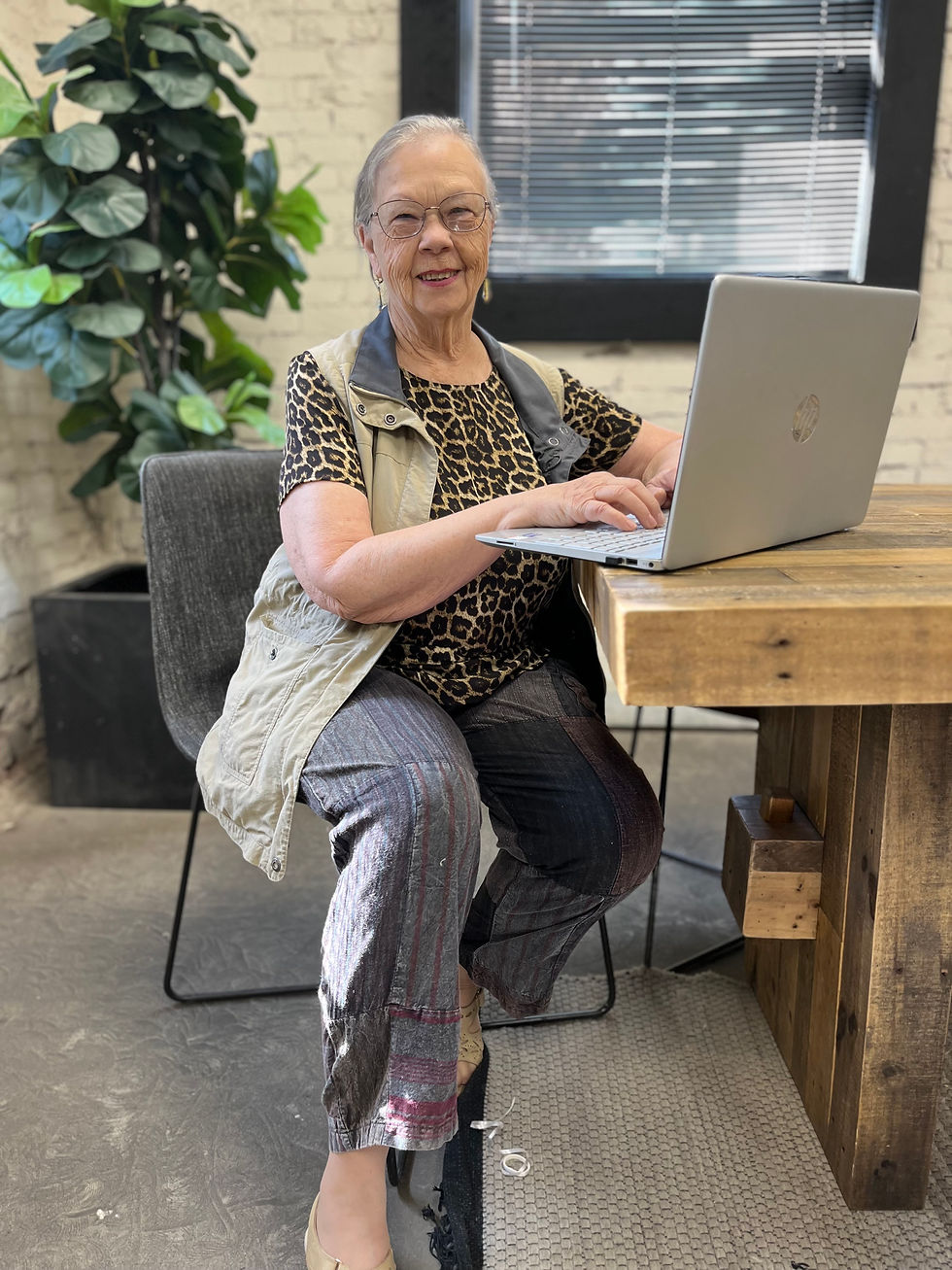
Becky Cerling Powers is a retired journalist, author, and compiler of several books, including Forbidden Orphanage Outside the Forbidden City; Sticky Fingers, Sticky Minds (parenting); and My Roots Go Back to Loving (El Paso family stories). She loves to listen to people’s stories and teach kids to write. You can find more about Becky at www.beckypowers.com.
What inspired you to write Wherever I Go?
Our kids inspired me to share my faith and love for the Bible at their level of understanding. I grew up in a strong Christian community, made a childhood decision to follow Jesus, and then confirmed that commitment as a young adult in college. Bible reading was part of my daily routine—until I started having kids, when my daily routine became exhausting, delightful, creatively inspiring, and constantly full of interruptions.
How long did it take you to complete the writing process?
I can’t remember. I wrote it over a period of more than 50 years, revising as the years passed. I probably started the writing process around 1974 or 1975. I made a scrapbook of photographs of our 4-year-old son to illustrate my first attempt at a child-friendly paraphrase. (I love taking candid photos and action shots of kids. When I took a journalism photography class in college, I photographed children for almost all my assignments. I love the way kids focus and concentrate on whatever they’re doing, whether it’s riding a bike in the rain or tying their shoes. They are so fresh, so alive, so packed with curiosity, energy, and joie de vivre.)
In 1976, I showed the album to a local ministry in Albuquerque called Hosanna, and they worked with me and another photographer to take more photos. They published the original version of the poem in 1977 with black-and-white photographs on colored paper stock. They were new to publishing, and the book had design issues. It went nowhere, which was disappointing. (Later, Hosanna developed into a ministry called Faith Comes by Hearing and gave me permission to publish this revised version of the poem.)
Years passed. Technology exploded in the photography and print worlds. I continued tweaking the verse and, as Shutterfly developed in tandem with our grandkids, I began making photo books of the grandkids to illustrate the verse. More years passed, and our daughter started a publishing company for African writers, called Catalyst Press. Then, even more years passed, and she began a hybrid publishing imprint for writers like me called Flare Books. One day, she came to me and said, “Mom, you know that poem you wrote with our pictures when we were little?”
So, for me, the road to publishing this poem was long and winding because first I needed to raise, homeschool, and adult-parent the publisher. 😊
Why do you believe it’s important for children to have access to books that talk about God?
The primary task of adult life is raising the next generation, teaching children the skills and attitudes they will need in order to survive and thrive as adults outside the protection of the homes they are growing up in. (Bears, lions, cats, and dogs…other mammals know this. Too many humans in our culture seem to have lost sight of it.)
Giving children access to books that talk about God is like giving them access to books that talk about other invisible realities, like germs. We teach children to take baths and to wash their hands after they use the toilet, even though they can’t see germs except with a microscope. Germs affect our lives every day. The spiritual realm also affects our lives every day.
Ignorance of the microscopic world of germs can kill you. Ignorance of the spiritual realm can lead to death in different ways as well. Without age-appropriate information, children may live in fear, stumble into social and spiritual danger, fail to recognize the Good, and fail to embrace it. Although kids can’t see germs, it is an invisible reality that affects their lives every day. So, just as we need to help them develop good sanitary habits and an understanding of germs, we need to help them develop good spiritual habits and an understanding of the spiritual realm.
What was your favorite part of writing this book?
In the early days, my favorite part was photographing our kids and grandkids with the words of the psalm in mind. In this last year, my favorite part was working with Karen Vermeulen, the illustrator.
The glowing illustrations really highlight the positivity of the story. How did collaborating with the illustrator enrich your words on the page?
Karen’s delight in children comes through clearly in her illustrations, mirroring God’s delight in His creation of our sweet kids.
How did your personal experiences or beliefs influence the story?
I was the second oldest of six siblings: two of us older sisters and our four little brothers, spaced out over 14 years, oldest to youngest. We had a wonderful, secure childhood with parents who kept their disagreements to themselves. Every night after we went to bed, Mom and Dad spent private time together. We knew we weren’t supposed to interrupt that time unless we were bleeding. They would read the Bible together, then discuss their day, plus any problems that had come up with any of us kids, and then they’d pray together.
Our parents were very engaged with us. They encouraged truth-telling, respect, kindness, and self-reliance. They were creative – Mom and Dad gardened, Mom sewed, Dad built our house and invented incredible toys that we loved, and that attracted lots of little boys in the neighborhood. Our parents shared poetry, literature, family stories…there was a lot of singing and music making, lots of play time, regular church, regular chores, regular mealtimes featuring pun fests, neighborhood sports, and family expeditions. And of course, we kids also squabbled and complained, and some of us rebelled. And returned. We married, had kids, some of us divorced…but we all came back to that secure center of our parents’ unconditional love.
It’s probably easier for me to believe in God’s unconditional love coupled with His high standards because I experienced that combination from my parents.
Were there any scenes or ideas that were particularly meaningful to you?
I especially appreciated Karen’s drawing of the little girl feeling small and shamed by the adults’ disrespectful words, by their contempt for their Creator.
If you could read this book to your younger self, what would you want them to feel or learn?
When I think back, I realize that I did not pick up the same sense of consistent, unconditional love in school and church that I experienced at home. I was very competitive academically, and despite my parents’ complete acceptance at home, I moved into adult responsibilities in the world with a lot of performance anxiety, which affected my relationship with God. So, thinking back, I would want my younger self to thoroughly absorb the idea that God loves me the way our family loved each new baby brother. We didn’t love the new baby because he gave us material possessions or did things for us. He didn’t help us with our work. In fact, he created a lot more work. No, we just delighted in our baby. We loved that first smile, that first laugh. And the second. And the next and the next. When he first started crawling or walking – we were excited! Yet, at the same time that we delighted in our baby brother, we took care to teach him, as he grew and developed, how to treat other people well; how to take on appropriate responsibilities and do his share of the work; how to be a good sport; how to contribute to making our family – and our community – peaceful, healthy, and strong.
How do you approach writing about faith in a way that is accessible and engaging for children?
I spend time with kids! And I tell stories. All kinds of stories, not just Bible stories. I teach children’s church, which gives me a good weekly reminder of how littles think, what kinds of stories they like, how they express themselves, what they like to do individually and as a group. I try to tailor our classes to their interests. The parents of three of “my” kids have started helping me teach. It’s great because when we debrief a class, I get their observations along with my own. I always enjoy talking to parents of young kids. It reminds me of the fun times and the challenges in that stage of parenting life.
What do you hope children—and adults—take away from reading this book?
God’s delight in children and His concern for the vulnerable, the needy, the weak, the ones that people easily push aside.
I hope that both the kids and the adults get the idea that God really sees us. He notices, He delights, He gives, He intervenes, and He also grieves.
In our relationships with each other, we need to connect with His perspective about our family, neighbors, co-workers, and friends. We need to look for what is going on with them: what is delightful, what is concerning, devastating, interesting, needed, or grievous; what is there.